
Denis Ladegaillerie
Founder & CEO, Believe

Here we go again! Like every new quarter, we’re back to introduce you to a selection of recently signed Believe and TuneCore artists that will bring some novelty to your playlist!
As always, we did our very best to introduce you to artists from all over the world and across a variety of music genres, so that there’s a little something for each one of you. And we’re positive that, among our selection, there’s an artist (or even several!) that you’ll be obsessed with over the next few weeks.
We have Egyptian trap music, electro-rap from Germany, dark R&B from the UK, alternative French rap, electro-pop from Hungary and urbano music straight from Puerto Rico. We’ve conducted our tests: it’s practically impossible that you won’t find something that suits your tastes or satisfies your musical curiosity!
Now, let’s go, you’re one click away from your next musical journey.
You could say that Aba Zsuffa and Ákos Vörön are two contemplative dudes. And their music is too, in a way. Analog Balaton really started in 2017, when the Budapest-based duo started experimenting with music. It took them years to strike that right balance between house, pop, alternative rock and downtempo electronica. But once they found it, it was a hit.
Released in 2021, Analog Balaton’s debut album LENT, was a huge success with both the public and critics, who named them “Electronic Music Artist of the Year” at the Petőfi Music Awards. Their success has opened the doors to major Hungarian festivals and has enabled them to support numerous local and international acts.
In a few years, Analog Balaton became Hungary’s biggest alternative electronic pop act, drawing crowds of thousands to their highly visual shows.Fresh off their summer tour, the band announced a major arena concert in 2027, during which they will present their third album.
No, 6€90 is not the price tag of their 2026 debut album Fotzen an die macht; it’s the name Kat and Nina came up with for their band while enjoying a happy hour at a bar with attractively-priced cocktails.
The two met after failing an audition. A friendship was born that led to the formation of what may be Germany’s first “pussy rap” band. And just by hearing the genre’s name, you know that 6euroneunzig ’s music is as wild as it gets : rap with raw, unfiltered lyrics that tackle social issues over energetic techno and electro-pop beats.
Their first single, “BADBITCH,” released in 2023, set the tone. Then, they built a cult following in German-speaking countries thanks to their wild concerts and tracks like “SlutAlarm,” “Zur Party,” and “TittenTraining,” which have racked up millions of streams. No doubt that their two most recent songs, “Kleiner Mann” and “Doktor Klaus” will follow the same way.
It’s time for you to discover Dark R&B. This subgenre, characterized by slower, darker beats and introspective, raw lyrics, is all the rage right now. And there’s a good reason why Mellina Tey has been crowned the “princess of Dark R&B.”
Since her first release in 2021, the young London-based singer, songwriter and producer has been quietly building one of independent dark R&B’s most devoted late-night audiences, gathering 500k monthly Spotify listeners and over 100 million streams across platforms, with tracks like “2AM,” “Before I Move On,” “Obsession,” or “Bank On It”, all produced and released independently through TuneCore.
After releasing “Did you get the memo” last March, Mellina Tey kept deliberately silent for a while, holed up in her studio to record her next era. With her new single “On The Floor” released on 20th August, the self-produced artist is preparing for her next big step.
Aloïse Sauvage is one of those people whose talent cannot be confined to a single field. Aloïse Sauvage is a circus artist, a breakdancer, and, above all, a renowned actress who rose to fame in 2017 with the movie 120 Beats Per Minute.
But what interests us here is her career as a singer and musician. After her first singles in 2017, followed by a debut EP called Jimi (2019) she has released two acclaimed albums, Dévorantes (2020) and Sauvage (2022). Her musical style, heavily influenced by French rap, slam poetry, and electronic pop, quickly found an audience. In 2020, she won the “Stage Revelation” award at the Victoires de la Musique.
A talented lyricist, Aloïse Sauvage tackles everything from love stories to more complex topics such as homophobia, sexual violence, and gender issues in her songs, as in “Tomboy,” her new single that heralds her third album, La Foudre.
While Puerto Rico is undoubtedly the mecca of reggaeton, Kris Floyd has managed to transcend the genre’s conventions to create his own musical world, incorporating influences from soul, R&B, and even trap to the globally acclaimed Latin music genre.
Through meticulously crafted releases such as the EPs En lo que Vuelvo Ill and El Último Mixtape, the young artist from Bayamón has built a growing reputation and following, both on his native island and beyond. And his songwriting talents have earned him collaborations with industry heavyweights like Tainy, Selena Gomez, and J Balvin.
With his latest album, Noches en La Isla, Vol. 2, Kris Floyd once again reaffirms his commitment to creating immersive and authentic artistic experiences. This EP was also the catalyst for his first concert in Puerto Rico, where he performed with a live band and alongside emerging guest artists.
Now a leading figure in the Arab hip-hop and trap scene, Egyptian rapper and songwriter Abo El Anwar has come a long way since the release of his first single in 2019.
Known for his inimitable flow, the artist has made a name for himself thanks to his relentless release schedule and numerous collaborations. Since 2020, he has released no fewer than 3 albums, 9 EPs, and about 60 singles – tracks like “Mmmm Mmmm,” “Khalsana,” and “Brrr Brrr Brrr”. were amongst his major hits. And he has worked with all the biggest names of the Egyptian rap scene: Marwan Pablo ,3enaba, Abyusif, Lil Baba…
Early 2026, he had reached over 80 million views on his YouTube channel and maintains a massive following on Spotify, 356K monthly Spotify listeners and 850k followers on Anghami. Needless to say that his 3rd album, Kalam Mkntsh Haaolo, has been heavily streamed since its release in May.
Highly popular in the United States, the Billboard Power Players is a ranking and awards ceremony that honors the most influential figures across all sectors of the music industry. At the first French edition of the Power Players, organized by Billboard France, Believe was prominently featured.
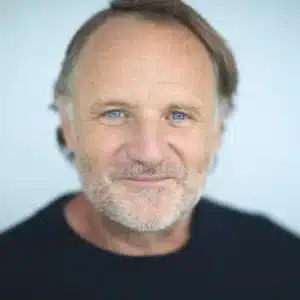
At the ceremony, which took place on September 15, 2026, Believe CEO and founder Denis Ladegaillerie received the Executive of the Year Award. Presented by legendary rapper Youssoupha (who has been signed to Believe for 15 years), this award recognizes Denis Ladegaillerie as the most influential figure in the French music industry.
Youssoupha once wrote:
“Aging is inevitable, but growing is a choice.”
Believe recently turned 20, so those words naturally resonate with me. Over the past two decades, we have grown tremendously. In 2005, the main barrier for an artist was accessing the market. Today, the challenge is being heard. Our path for the years ahead is clear: to actively develop local ecosystems and deepen our partnerships with DSPs so that more artists can build sustainable, successful careers, just like Youssoupha.
Denis Ladegaillerie
Founder & CEO, Believe
This award also earned Denis Ladegaillerie the top spot on Billboard France’s “Power Players” leaderboard, created by the French edition of the renowned American publication. He shares this top spot with Romain Vivien, Global Head of Music and President of Europe & the U.S.
Beyond the “leaderboard,” the “Power Players” list also includes many Believe executives among France’s most influential figures!
Henri Jamet, CEO of Believe France, ranks second in the Label Groups category.
In the Labels category, Anthony Karakaya, Director of Artist Services at Believe France, ranks first. Sébastien Saussez, founder of Jo&Co and CEO of our new imprint, All In, also ranks 12th in this category.
Finally, Ismaël Kané, CEO of Believe Music Publishing France, is ranked 7th in the Publishing category, while Stéphane Wehrlé is ranked 11th in the Live category.
This award and these recognitions are a testament to the success of Believe and its teams, but they also highlight how, over the past 20 years, Believe has become one of the driving forces behind the music industry in France and beyond.
Find all the details about the Billboard France Power Players on Billboard France.
Making you discover exciting labels from around the world is also our job, here at Believe. That’s what our “Label Focus” is here for! Today, we’re bringing you one of Thailand’s finest pop music labels: smallroom.
Founded more than 25 years ago by four friends while they were architecture students, smallroom has been a loud and proud champion of the Thai indie pop and indie rock scenes since its inception, and has grown to become one of the most revered pop music labels in Thailand.
We spoke with Rungroche Uptampotiwat, one of the label’s co-founders and directors, to learn more about smallroom’s long and rich history and to understand how the label has become one of the pillars of Thailand’s bustling pop scene
While smallroom is highly recognized in Thailand, how would you briefly introduce and define the label to an international audience who might not be familiar with your work?
Rungroche Uptampotiwat: Smallroom was born out of our passion for international music from the 70s and 80s. In the early 2000s, we began exploring international pop labels, such as Bungalow Records in Germany or Escalator Records in Japan, which inspired us for our label.
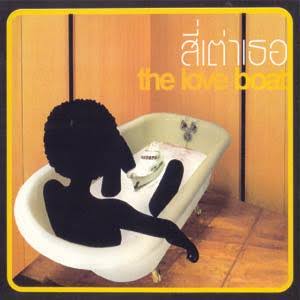
We started by releasing compilation albums, drawing inspiration from the catalog numbering system of UK label Sarah Records. Afterward, we transitioned to full-length studio albums, beginning with the Thai alternative band สี่เต่าเธอ (See Tao Ther). We really started to consistently release full-length studio albums in 2006
Since then, our objective has been to cultivate a collective of artists tailored for the Thai music market. We still remain dedicated to the core philosophy of independent music—showcasing indie pop, indie rock, or any alternative genres that captivate us and that we wish to present to the world.
smallroom has been a cornerstone of the music industry for 27 years. What was the initial inspiration behind founding the label back in 1999, and how has it evolved or transformed over time?
Rungroche Uptampotiwat: Before smallroom, I had the opportunity to run another record label. We were only able to release two projects before having to shut down operations, because running a label back then required substantial budgets.
When we started smallroom, our primary objective was to build a record label that could generate a sustainable income. We scaled gradually, as the key challenge was figuring out how to grow without repeating these past financial mistakes.
We began with compilation because we knew that launching a full-length album for a band required a highly structured business system—including dedicated live booking operations and public relations processes. We officially integrated them in 2006.
To this day, our foundational philosophy remains unchanged. Though we have continuously expanded our operations, we maintain a highly disciplined approach to our budget. However, we do not avoid major investments; we still allocate significant capital toward projects we believe in, projects that we are confident will resonate within the Thai market, whether through music releases, concerts, or merchandise.
Who are the current artists signed to the label, and which prominent artists have you collaborated with in the past?
Rungroche Uptampotiwat: Currently, smallroom is home to approximately 28 artists, with Tattoo Colour and Polycat leading as our top-tier acts. We also have a roster of new-generation indie bands positioned to become highly popular in the alternative music scene, such as TOFU or Television off, an alternative rock band that we can see becoming one of our top three acts.
We are constantly scouting new talent. Concurrently, we signed two highly talented emerging female singer-songwriters last year: Jduck and gizzdear. We are guiding them both so they can build a solid foundation and win over a wide audience.
We remain committed to strategizing innovative approaches to ensure the continued popularity of our top acts, while also supporting other artists on our label so that they can become leading national artists.
Our objective has been to cultivate a collective of artists tailored for the Thai music market. We still remain dedicated to the core philosophy of independent music—showcasing indie pop, indie rock, or any alternative genres that captivate us and that we wish to present to the world.

Rungroche Uptampotiwat
Director, smallroom
Which music releases, projects, or concerts by smallroom over the years have left the most profound impact or been the most memorable for you?
Rungroche Uptampotiwat: It’s mostly concerts because there are so many! Among them are our 10th-anniversary and our 12th-anniversary celebration. We hosted them as free outdoor concerts right in the heart of Siam Square, drawing an estimated crowd of 8,000 to 10,000 attendees.
What was interesting about that era was that our fanbase largely consisted of minors. Fast forward to about eight years ago, we hosted a festival by the beach called “smallroom Holiday Party.” But the attendees – about the same number –
had grown into adults. It made me realize how our fanbase was organically transitioning.
And when we recently had our “smallroom Holiday Party Twenty-Fifth Year,” to celebrate smallroom’s 25th anniversary, it was very moving to see that our fanbase that now beautifully brings together both the new generation and our longtime listeners.
Another memorable milestone was Tattoo Colour’s concert titled “กาลครั้ง 5 Tattoo Colour Fest (Karn Krang Ha Tattoo Colour Fest)“ held at Impact Arena. It drew a crowd of 10,000 people per show, and tickets for both nights sold out within just two hours.
What is the next chapter for smallroom, and what upcoming projects should fans look forward to?
Rungroche Uptampotiwat: We are preparing for the largest concert in our label’s history. At the end of 2026, Tattoo Colour will play at Rajamangala National Stadium, one of Thailand’s largest stadiums. The event is set to accommodate over 60,000 fans, so we are fully committed to creating an unforgettable experience for everyone.
Admittedly, music from our label is often perceived as niche or alternative. But we have always believed that what starts as a niche can eventually capture the mainstream market. It has always been our philosophy. And this “Tattoo Colour” concert is striking proof of that.
So, our next step is to firmly uphold our foundational principle: operating a record label that delivers high-quality music that we are genuinely proud to present to the Thai music industry, while consistently maintaining our creative and operational standards. We would like to sincerely thank everyone for their continued support for smallroom.

Tattoo Colour

Gizzdear

television off
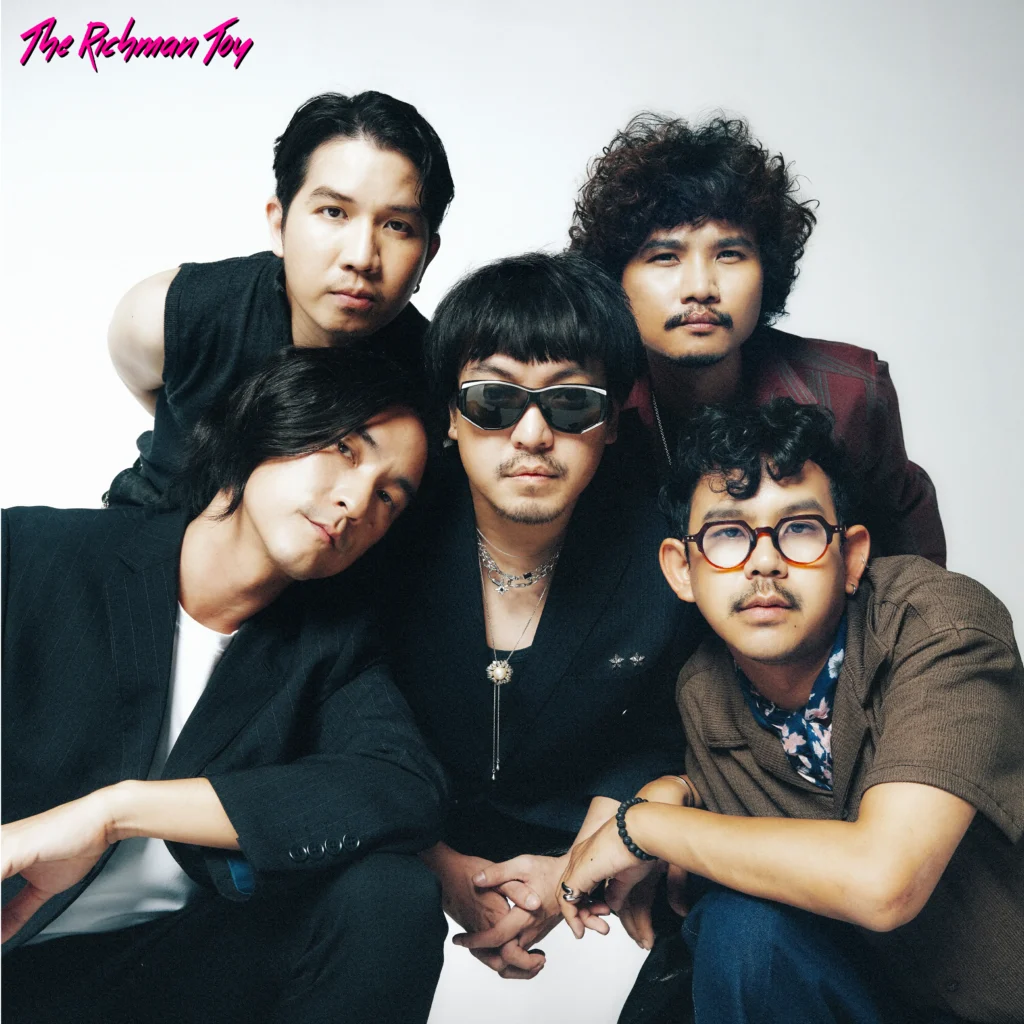
The Richman Toy

Wav

Slur

Polycat

Dept
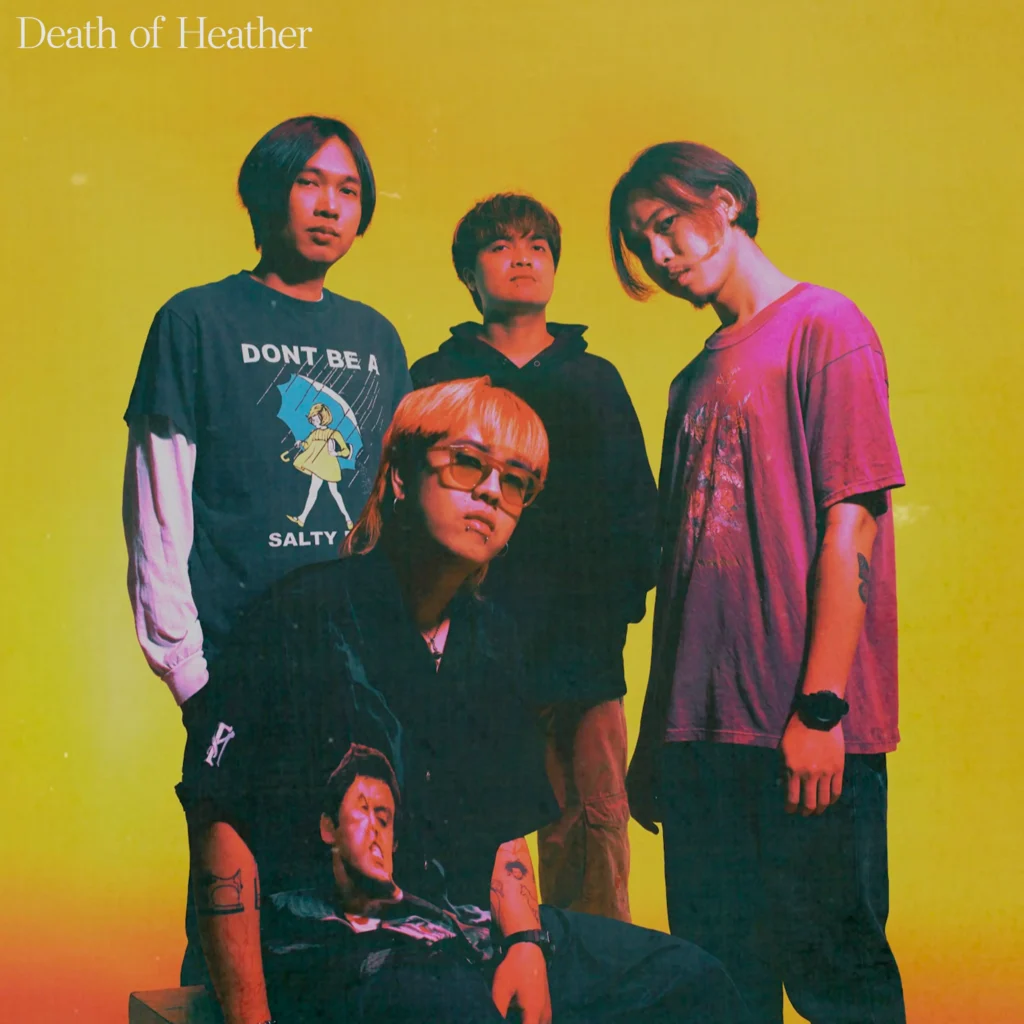
Death of Heather

Penguin Villa

Wadfah

Tofu
What are the Believe artists’ songs that are topping the charts around the world? That’s exactly what our “Trending In” articles invite you to discover.
In this new issue, we’re heading to France, the birthplace of Believe, where the artists we work with placed no fewer than 45 albums in the Top 200 in 2025. And where Believe artists frequently rank among the top singles and albums. We’ve selected for you 5 of the most iconic tracks of the moment, from established and emerging artists alike.
And because it’s always best to have a local perspective, we asked Julien Parrot, Head of Editorial, Marketing & Partnerships at Believe France to give you some insider knowledge about these songs.
Taken from Le Nord Se Souvient: l’Odyssée, the best-selling album in France in 2025, the urban pop track “Parisienne” became one of the hottest hits of 2025. And it was just another one for rapper and singer Gims, whose fame extends far beyond France’s borders.
As Julien Parrot tells us, “2025 was a record-breaking year for Gims, as he had four songs in the top 5 most-streamed songs of the year, with ‘Parisienne’ coming in at No. 3. Gims was also the most-played artist on the radio, and his French tour was completely sold out.”
The fact that “Parisienne” earned a Diamond certification in just two months perfectly illustrates the public’s enthusiasm for that hit, as does the fact that the song still ranked fifth on YouTube’s Top France chart this summer!
Though Linh has always been immersed in music and already had a lot of experience as a singer, it really was in 2021 that her career took a decisive turn, thanks to videos she shared on TikTok. Fueled by her early fans, Linh’s pop songs caught the attention of Gims… which invited her to open for him on his national tour in 2022.
Thanks to her label’s efforts to promote her songs on the radio, she has managed to build a strong fan base, and the general public raves about her songs. « Linh has earned a diamond certification for her single “Je pense à vous”, a gold certification for “J’avoue” and she has sold more than 25,000 copies of her debut album Boîte à musique“, points out Julien Parrot.
“Phénomenal” is not just a song title, it’s the perfect word to describe Marseilles-based rapper and producer Jul. Since 2014, “The U.F.O – as he calls himself – has released no fewer than 26 studio albums, 12 mixtapes, over 100 singles, has received over 300 certifications and owns the record for the largest crowd at Paris’ Stade de France.
“Jul has been the most-streamed artist in France for the past five years,” explains Julien Parrot. “He made his comeback in 2024 with the song ‘Phénoménal’—which was a huge hit with the public.” Taken from his 24th album D&P à vie, the song got a diamond certification in just 4 months.
Following the release of her 25th studio album last December, Jul released Oubliez-moi in May, an album that went Gold in 10 days.
Bouss is a young prodigy from the southern suburbs of Paris who gained recognition between 2020 and 2023 with a series of hard-hitting songs. As Julien Parrot confirms, “he’s one of the rising stars of the French hip-hop scene.”
Combining a melancholic melody with the realities of life on the streets, “Biff pas d’love” left a deep impression on its audience. The song, which has been certified diamond, is among the most-streamed tracks from his third album, Et si j’échoue ??.
“Bouss already has a very loyal and active fan base,” Julien Parrot continues. “Not only did that help him achieve triple platinum status for her first and second albums in less than two years, but his fans also sold out both of his shows at the iconic Accor Arena”.
As soon as it was released in October 2025, “Rebanav 126BPM” spread like wildfire on TikTok, generating more than 140 million views and 200K user-generated videos in two weeks.
The Afro-inspired track by young rapper Chily has not only become his hit of the year but has also served as his calling card. “After climbing to the top of the Shazam Top 10, the song introduced Chily to a wider audience, both in France and abroad, in particular in Germany and French-speaking Africa,” says Julien Parrot, adding “It’s also the song that earned him a gold record the fastest!”
With over 43 million views of the music video on YouTube and 35 million streams on Spotify, “Rebanav 126BPM” has helped Chily solidify his position in the French and international rap scene.
As Believe steps boldly into its third decade, the company is transforming its core philosophy. The foundational years were defined by a beautiful, sweeping mission: democratizing access. Believe supercharged the digital revolution to ensure that any independent artist or label could seamlessly distribute their art across every major global platform. That baseline has been triumphantly achieved.
Now, the next evolutionary leap is not just about getting independent music heard, it is about propelling artists to the absolute summit of local, regional and global charts on their own terms. The era of pure access has evolved into the era of success.
Believe is no longer just providing an alternative pipeline; it is going toe-to-toe with key music players in every single territory it touches. The company’s grand ambition is to secure a top-three market position across the world’s top twenty-five music landscapes, a milestone it has already cleared in twelve of those markets. This competitive edge comes from an unshakeable belief in the power of local culture.
Our view is that seventy per-cent of the value of the music industry is in local markets, namely local artists in local markets. If you take some of the money that you receive from Spotify, and start reallocating money to global artists, you are taking it away from somewhere else. It’s a zero sum game. You are taking it away from your local artists. For us, the core differentiator is that we’ve been breathing one-hundred per-cent tech, digital and music for the past twenty years. It makes us move faster in terms of having a better understanding of Spotify, YouTube, TikTok and so on than the majors do. This is creating the right competitive mood for us.”
Denis Ladegaillerie
Founder & Chief Executive Officer
By shifting the focus toward the top of the charts, Believe is designing a model where technical innovation and deep creative investment work in perfect harmony. Bringing independent talent into the mainstream does more than win immediate chart battles; it constructs the historic, evergreen catalogues that will define the musical heritage of tomorrow.
To fuel this engine, Believe is aggressively reinvesting in frontline A&R through a powerful two-pronged approach: cultivating brilliant internal talent spotters organically, while simultaneously partnering with the most respected, culturally significant independent labels in the world such as Germany’s heavy-metal powerhouse Nuclear Blast and France’s iconic Tôt ou Tard.
The access piece is going to remain very important. But the success piece is where we can invest differently, where we can leverage technology, where we can extract more value, price higher, get better margins, and help our artists to go to the top. That is because the value sits at the top. All the artists and the content that you can bring to the charts will not only secure a big share of the value in individual markets, or even globally; they will then create a very valuable catalogue. If you look at the past two years’ numbers, the piece that grows the fastest in the mature markets, starting with the US, is catalogue. So having valuable catalogues means very good art and very good music, but also a catalogue that has reached a significant audience. That’s why the success part is so important: because this is long-term value creation.”
Romain Vivien
Global Head of Music & President, Europe
On the technical side, Believe is completely re-engineering its product roadmap. While the previous decade was about building stable digital delivery systems, the new blueprint focuses entirely on giving artists and labels the cutting-edge tools required to find, cultivate, and deeply engage their communities. Access opened the door to casual listeners; success is about honoring and protecting the beautiful relationship between an artist and their most passionate followers.
Now that we’ve established our access products, like distributing your content for libraries on social networks where all royalty conditions are respected, we’re shifting more and more to a success-oriented product strategy, where we invest in products to help artists and to help labels to meet their audiences and engage with them. This is what we call success on the product side.”

Romain Becker
Chief Operating Officer
This strategic evolution replaces clinical numbers with genuine human experience, ensuring that independent artists build sustainable, lifelong careers rather than chasing short-term viral trends.
Creating superfans is the core thing for me right now in the Believe business model. This requires emotional thinking. You have to bring experience to consumers and people, not feed them with data or release planning. This is what A&R is for me. It’s emotional. I think the modern music business right now is going to focus more and more on superfans. Superfans are not analytics. It’s emotional.”

Henri Jamet
General Manager, France
Rather than resting on two decades of historic achievements, Believe is using its rich heritage as fuel for its most daring chapter yet: expanding its presence into the United States. As the largest, most competitive music market on Earth, the US operates by its own fierce rules. Planting a permanent flag on American soil is the ultimate validation of Believe’s creative framework, the stunning culmination of everything the company has pioneered since its beginnings in Paris.
By introducing its uniquely empathetic, digital-first artist development engine to the American landscape, Believe is confidently racing toward a borderless future. It stands ready to prove that the “access to success” model can empower creators in the world’s biggest arena, establishing a new global gold standard for artistic freedom.
Our journey has always been about breaking down walls and putting power back where it belongs, in the hands of the creators. The ‘access to success’ model is proving its worth every single day on a global scale. By bringing this exact blueprint to the United States, our new frontier, we are ready to show the world that independent music does not just belong on the charts; it is ready to lead the entire industry into its next era.”
Denis Ladegaillerie
Founder & Chief Executive Officer
The first twenty years of Believe were shaped by a simple conviction: that technology could democratize access to the global music industry. The next twenty will test an even greater ambition – that independent artists, songwriters, labels and publishers can achieve lasting success on their own terms, supported by technology, local expertise and long-term creative partnerships. The story of Believe is only just entering its next chapter.
———————
Article written by Eamonn Forde. Eamonn Forde is an award-winning music business journalist and author. He writes for The Guardian, Forbes; Music Week, and Music Business Worldwide and several other publications.
Reclaiming its absolute privacy in July 2025, Believe officially exited the public stock market. Valued at a commanding €1.54 billion, the company was once again completely independent, unburdened by short-term shareholder demands and injected with a surge of raw, strategic energy.
Free to take massive structural swings on its own terms, Believe immediately set out to expand its model across new global territories and technical frontiers, aiming to fulfill its ultimate destiny: a unified, all-in-one artist ecosystem.
How do you position yourself internationally to be able to support Japanese artist developments outside of Japan? We think our position as the number one player in the region […] allows us to really support acts best because they are often their first export markets.
Denis Ladegaillerie
Founder & CEO, Believe
Believe directed its focus toward Japan, the second-largest recorded music market on the planet. Historically anchored in physical formats, the Japanese music industry remained slow to adopt digital streaming. Where competitors saw a rigid, legacy barrier, Believe recognized the ultimate digital growth playground. Believe launched Label & Artist Solutions in Japan in 2025:
“Japan was still one of the markets that was the least digital,” says Denis Ladegaillerie about the company’s expansion there. “Most of the labels still have an issue around understanding digital and transforming themselves digitally. They are about ten years behind where the US is or Europe is in terms of digital adoption.“
“We are able to position ourselves and accelerate transformation, which is what some of our competitors have not done. We have another competitive advantage in Japan, which is TuneCore. We operate it locally and it is already the third-largest market player in Japan, with a ten per-cent market share there. What we’re doing now is bolting on a higher level of service so that we can better serve and develop our set of TuneCore clients.“
Beyond local transformation, Believe planned to turn Japan into a powerful export engine.
“How do you position yourself internationally to be able to support Japanese artist developments outside of Japan?” asks Denis Ladegaillerie. “We think our position as the number one player in the region, in Indonesia, in Thailand, in the Philippines, in other countries there, allows us to really support acts best because they are often their first export markets.“
To capture this unique cultural landscape, the execution required an intimate, localized touch.
“The Japanese market has its own rules and its own habits, says Romain Becker.We need to understand what the labels and artists want, what they need.“
Just as it had done a decade earlier to conquer the French market, Believe used the underground power of local hip-hop to establish its presence in Japan. The secret weapon for this strategy was the deep repository of data from TuneCore Japan, which already served as the foundational hub for the country’s urban music scene. To scale these independent creators, Believe launched its specialized imprint, PLAYCODE.
“The reason we launched hip-hop label Playcode in Japan was thanks to TuneCore, “says Sylvain Delange. “The reality is that TuneCore Japan today is, by far, the biggest hip-hop ecosystem in Japan. A large majority of hip-hop artists transit through TuneCore in one way or another, work with TuneCore in one way or another, or collaborate with TuneCore in one way or another.“
The long-term roadmap for the region was simple: upgrade the entire independent infrastructure to give grassroots talent a premium pathway to the mainstream.
“Our ambition is very simple. It’s the same as what we’ve done in France and other markets. We want to be the number one hip-hop artist development company in the country. In Japan, it’s about transforming and maximising the unique position that TuneCore has been building to create a very strong artist development engine to start transforming the industry from the inside. One where it is more digital-friendly, more focused on engaging with audiences, giving more space to up-and-coming genres such as hip-hop. Japan is a big priority,” Sylvain Delange continues.
Two years after absorbing the administration platform Sentric, Believe officially completed its full-stack vision. In October 2025, the company launched Believe Music Publishing across multiple global territories, pairing its massive audio distribution pipeline with a digital-first approach to tracking and collecting songwriting royalties.
“With digital now being the biggest driver of collections for creators, and the publishing market exceeding €4billion after a decade of double-digit growth, we are uniquely positioned to lead the evolving publishing market, where growth continues to be increasingly driven by digital, with a publishing arm that now matches and complements our leadership in recording, said Denis Ladegaillerie on the launch of this new operational arm.
This launch transformed the company into a comprehensive destination for creators, providing a transparent framework that protects an artist’s earnings across every single revenue stream.
We are building machine learning on catalogue to understand what catalogue should be promoted when. […] Technology is going to be better than humans, to a large extent, to be able to surface information to humans, to market and promote. It is where the investment is going to go.
Romain Vivien
Global Head of Music & President, Europe
As artificial intelligence began reshaping the music industry, Believe treated the technology as a powerful creative ally. The company integrated automated tech tools into every tier of production, guided by a clear ethical framework based on four unshakeable pillars: Control, Consent, Compensation, and Transparency.
To demonstrate the positive power of these tools, Believe started exploring GenAi video creation, allowing independent artists to rapidly design stunning, cost-effective visual content to re-engage modern audiences.
“We can create GenAI content cheaper and faster to repackage our catalogue content and re-market, promote and expose it to new generations and new audiences”, says Romain Vivien. “We will bring in more value to our content creators, to our artist labels, and to the catalogue.“
We are building machine learning on catalogue to understand what catalogue should be promoted when. […] Technology is going to be better than humans, to a large extent, to be able to surface information to humans, to market and promote. It is where the investment is going to go.
Denis Ladegaillerie
Founder & CEO, Believe
While embracing the creative upside of automation, Believe acted as a strict frontline guardian against cyber-fraud. The company deployed solutions to automatically block the distribution of AI-generated tracks partly or fully produced on unlicensed GenAI platforms.
Instead of wasting resources on artificial audio clutter, Believe also funneled its machine-learning power into optimizing real human art, building predictive models to comb through backend data and identify the precise moment a classic catalogue track should be re-promoted to global streaming platforms.
“We are building machine learning on catalogue to understand what catalogue should be promoted when,” Denis Ladegaillerie notes. “That machine learning integrates anniversary dates and events [to make strategic decisions]. Technology is going to be better than humans, to a large extent, to be able to surface information to humans, to market and promote. It is where the investment is going to go.“
By transforming raw global platform data into a localized creative compass, Believe handed its artists a massive competitive advantage.
“We are using data to understand how the local music ecosystems are evolving through time,” says Elsa Bahamonde Bourgain.”Our deep understanding of the content market and retail market locally is also a key element, because it helps us to understand which genres of music are growing ahead of market growth, and which genres of music are working better on which platforms. All this market understanding that is very data-driven also helps us to have better development strategies for our artists.“
As it celebrated two decades of reshaping the music business, Believe stood at the absolute peak of its operational power. Backed by an all-in-one tech stack, a flawless track record across multiple sub-genres, a €1B turnover and complete private independence, the company was primed for its most monumental boundary-crossing leap yet: conquering the United States.
———————
Article written by Eamonn Forde. Eamonn Forde is an award-winning music business journalist and author. He writes for The Guardian, Forbes; Music Week, and Music Business Worldwide and several other publications.
When Believe went public in 2021, it was an undeniable power move. The blockbuster stock market debut injected a massive war chest of capital into the business, signaling to the entire financial world that Believe had officially entered the global heavyweight division, commanding a workforce of over 2,000 experts across 50 countries.
Believe has a significant opportunity ahead to consolidate the independent music market and create the first global major independent, at the service of artists at all stages of their career.
Denis Ladegaillerie
Founder & CEO, Believe
While the company was expanding at supersonic speed, stock market day-traders didn’t always appreciate the creative rhythm of the music business. By early 2024, a powerhouse consortium formed by founder and CEO Denis Ladegaillerie, alongside major long-term stakeholders EQT and TCV, launched a massive €1.523 billion takeover bid to buy back the company: it was time for Believe to break free from the public market and reclaim its absolute independence.
Because the trio already controlled 71.92% of Believe’s share capital and 77.42% of the voting rights, they launched a mandatory tender offer to sweep up the remaining public shares at €15 each. This represented a 43.8% premium over the previous month’s average trading price. The board of directors immediately gave the plan a unanimous, enthusiastic thumbs-up.
“Since being a public company, Believe has systematically outperformed its objectives, delivering its IPO plan two years ahead of schedule,” said Denis Ladegaillerie on revealing the consortium’s bid. “However the strength of its operational performance has not been reflected in the share price evolution. Believe has a significant opportunity ahead to consolidate the independent music market and create the first global major independent, at the service of artists at all stages of their career.“
With the major music companies actively seeking to strengthen their positions in the independent music sector, Believe’s privatization process attracted additional interest. In early March 2024, Warner Music Group publicly confirmed that it had approached Believe regarding a potential combination and had indicated that it could value the company at a price of at least €17 per share, on a confidential, exploratory and non-binding basis.
“WMG would provide Believe with strategic support and financial stability to help the development and growth of the Company, including by accelerating its expansion into new geographies”, the major label announced in a statement.
The high-stakes standoff was thrilling but short-lived. By early April, after peaking behind the curtain, WMG issued a brief corporate memo stating that “after careful consideration, it has decided not to submit a binding offer for Believe.” The runway was now completely cleared for Denis Ladegaillerie’s independence mission.
With enhanced financial agility […] the group is now best equipped to achieve our collective goal: to make Believe the global leader in independent music, serving artists and labels worldwide.
Denis Ladegaillerie
Founder & CEO, Believe
Once Warner dropped out, the buy-back plan accelerated at blinding speed. By June 2024, the founder-led consortium had secured over 85% of Believe’s public shares, quickly climbing to a crushing 95% total control by the end of the month. The company was officially locked down, privatized, and liberated from public market distractions.
“Following the friendly takeover bid we initiated, the Consortium now holds 95% of Believe’s capital, announced Denis Ladegaillerie. “Our shareholders have overwhelmingly decided to tender their shares to the offer, leading to a real success! With enhanced financial agility and the proven expertise of the Consortium members, the group is now best equipped to achieve our collective goal: to make Believe the global leader in independent music, serving artists and labels worldwide.“
While the multi-billion-euro corporate saga was unfolding in the boardrooms, the music machine outside didn’t skip a single beat. In March 2024, Believe revealed that its 2023 annual revenues had climbed to an impressive €880.3 million, backed by the news that over for TuneCore only, 80,000 independent musicians were actively using the automated TuneCore Accelerator marketing engine to amplify their global reach.
The international expansion rolled on without interruption. Believe Japan launched PLAYCODE, a dedicated new label engineered to champion the underground Japanese hip-hop scene, perfectly mirroring the hyper-local hip-hop blueprint that conquered France a decade prior. By July 2024, Believe secured a 25% stake in Romania’s premier music force, Global Records, and by September, regulators gave the green light for Believe to officially absorb Turkey’s independent powerhouse, Doğan Music Company (DMC).
To top off this stellar run of growth, TuneCore announced a staggering milestone: it had successfully funneled over $4 billion directly into the pockets of self-releasing artists since 2006. By August, Believe reported H1 2024 revenues of €474.1 million, a sharp 14.1% leap forward compared to the previous year.
This milestone took place during a period of significant change across the music industry. In February 2024, Universal Music Group temporarily removed its catalogue from TikTok during a licensing dispute, before reaching a new agreement with the platform in May. Believe, which had long viewed short-form video as an important channel for music discovery, continued to develop its capabilities on the platform, rolling out TikTok’s Add to Music feature across 163 markets to help artists reach new audiences.
The broader international music economy continued its historic upward march. According to IFPI data, global recorded music revenues grew 4.8% to reach an all-time high of $29.6 billion in 2024. Streaming subscriptions jumped 9.5% to hit a staggering 752 million paid users worldwide, driving a massive $20.4 billion streaming economy that captured 69% of the total market space. To illustrate the scale of this digital ecosystem, Spotify revealed it had distributed a massive $9 billion to rights holders in a single year.
As Believe approached its twentieth anniversary, the company had assembled the key elements of the model it had been building for two decades: a global technology platform, strong local market positions, financial flexibility and a comprehensive artist development offering. It was now positioned to pursue its long-term ambition of becoming the world’s leading global artist development company.
———————
Article written by Eamonn Forde. Eamonn Forde is an award-winning music business journalist and author. He writes for The Guardian, Forbes; Music Week, and Music Business Worldwide and several other publications.
By 2023, the global music business was firing on all cylinders, riding a wave of double-digit growth. Total industry revenues climbed 10.2% to reach a staggering $28.6 billion, according to the IFPI. Paid subscription streaming alone generated $14 billion, and when you factored in ad-supported plays, streaming made up more than two-thirds (67.3%) of the entire global marketplace.
Believe was outpacing the boom. The company crossed a massive milestone by generating over €1 billion in digital music sales the previous year, reporting €760.8 million in total revenue for 2022. That momentum showed no signs of slowing, with H1 2023 revenues jumping another 17.9% to reach €415.4 million.
But Believe’s ultimate goal was never just about scaling up distribution volume. Over nearly two decades, the company had systematically built out separate divisions, including a record label ecosystem, localized artist marketing teams, and a massive entry-level platform through its 2015 purchase of TuneCore. In March 2023, Believe made its biggest acquisition to date by purchasing the music publishing platform Sentric for €47 million, locking in the final, vital piece of its business model.
The acquisition of Sentric is the first step for Believe in the roll-out of a global and comprehensive publishing offer. The growth and digital transformation of the songwriters’ market is opening-up many opportunities.
Denis Ladegaillerie
Founder & CEO, Believe
To understand why the Sentric deal was such a massive milestone, you have to look at how a song makes money. For years, Believe had been a master at handling the master rights, the actual audio recording of a song. But every time a track gets streamed, it also generates money for the publishing rights, the underlying songwriting, lyrics, and composition.
Sentric, founded in Liverpool in 2006, was an absolute genius at hunting down those songwriting royalties. By 2023, the company had partnered with over 70 collecting societies across 200 territories, representing more than 4 million songs and 400,000 songwriters. By buying Sentric, Believe could instantly offer a world-class songwriting royalty network to its entire roster.
“The acquisition of Sentric is the first step for Believe in the roll-out of a global and comprehensive publishing offer,” said Denis Ladegaillerie, when announcing the deal. “The growth and digital transformation of the songwriters’ market is opening-up many opportunities. We are excited to be able to immediately expand the services we provide to our existing TuneCore clients with Sentric’s best-in-class royalty collection service, while starting to work on future innovative products and services for all of Believe’s songwriters and publishers.“
What we wanted to do here was to enrich our set of capabilities in terms of services. With TuneCore, we wanted to address the DIY market as we did not have the capability to do that. And with Sentric, we wanted to be able to start bolting on publishing. We felt it was better for us to acquire these capabilities.
Denis Ladegaillerie
Founder & CEO, Believe
This acquisition fulfilled Believe’s long-term dream of becoming a vertically-integrated music company. Instead of an artist having to hire one company to put their music on Spotify, a separate label to market it, and a completely different corporate entity to collect their songwriting checks, Believe could now handle the entire lifetime of a music career under one roof.
“What we wanted to do here was to enrich our set of capabilities in terms of services,” Denis Ladegaillerie explains. “With TuneCore, we wanted to address the DIY market as we did not have the capability to do that. And with Sentric, we wanted to be able to start bolting on publishing. We felt it was better for us to acquire these capabilities.“
When these separate components are connected, they create a powerful ecosystem where a bedroom artist can start on TuneCore, find an audience, graduate to Believe’s advanced marketing tiers, and have their global publishing royalties tracked automatically.
“Ultimately, a modern music company is a full-stack music company that is able to support artists all the way from entry to the top with different programmes, with different ways of working with them,” proposes Denis Ladegaillerie.
While legacy music conglomerates had offered these combined services for decades, Believe’s leadership purposely chose to wait until the digital infrastructure was perfectly mature before making their move into publishing. Building a global royalty-tracking network from scratch would have taken years of trial and error; buying an established tech specialist was a much smarter play.
“Many of our competitors had already been doing it for ages, and we had to become competitive,” says Henri Jamet. “Denis is a really clever person. He wants to do it by order. The fact was that he was waiting for publishing [to come along]. When he acquired Sentric, I understood how he had made the right move. We needed the tools in place first to start publishing. We could have developed publishing organically in a small office, but acquiring a specialist in digital copyright management was the best thing to do, before then hiring people in multiple countries.“
The Sentric deal was taking a strong tech-empowered publishing administration company into a creative business so that we could move up the value chain and grab more margin
Romain Vivien
Global Head of Music & President, Europe
From a purely financial standpoint, bringing Sentric into the family allowed Believe to move further up the industry food chain. In the streaming era, where billions of micro-transactions occur across the internet daily, having an automated tech platform that registers songs and sweeps up royalties directly means keeping a much larger piece of the financial pie.
“The Sentric deal was taking a strong tech-empowered publishing administration company into a creative business so that we could move up the value chain and grab more margin,” says Romain Vivien. “The people we are working with, and who are also signing developing artists, continue to do a fantastic job – better than anyone on the collection, the registration, and the administration side. This is key, specifically with most of the revenue now coming from the digital space.“
By the close of 2023, Believe had successfully read the digital landscape’s growth curve once again. By combining automated royalty tracking with a global independent network, the addition of a full-scale publishing engine positioned the company perfectly for its next major corporate chapter.
———————
Article written by Eamonn Forde. Eamonn Forde is an award-winning music business journalist and author. He writes for The Guardian, Forbes; Music Week, and Music Business Worldwide and several other publications.
Fresh off its successful 2021 stock market launch, Believe was equipped to accelerate its global expansion. But while its international teams were busy opening new doors, the company’s biggest story was unfolding right in its home market.
For years, France had served as Believe’s primary laboratory, a testing ground to prove that an agile, tech-driven company could spot underground movements and nurture overlooked talent. In 2022, that long-term vision reached a defining milestone, as Believe became the leading company for local repertoire in its home market, demonstrating that a new approach to artist development could thrive at scale.
Based on the final sales tally from 2021, Believe announced it had become the second-largest music company in France for annual market share of frontline domestic artist albums. Local-language music was completely ruling the French charts, leaving massive American and British pop superstars trailing in the dust. Leading the charge for Believe were blockbuster releases like rap icon Jul’s Demain ça ira. To secure this position, Believe kicked off 2022 by acquiring a 51% stake in the influential French independent label Jo&Co.
You have exceptions […] but, in most cases, it takes three years to develop an artist from zero to the top 10. It takes five years to develop them to become regularly number one Billboard-charted artists. And it takes ten years to make them household names in some countries. And it takes another ten years to get them to become household names in several countries. It’s a long investment and development cycle
Denis Ladegaillerie
Founder & CEO, Believe
This massive chart takeover didn’t happen by accident, nor did it happen overnight. While the digital age moves at lightning speed, Believe’s core philosophy has always been anchored in a deep, patient development cycle.
“You have exceptions and you have accidents where it really goes much faster, but, in most cases, it takes three years to develop an artist from zero to the top 10,” explains Denis Ladegaillerie. “It takes five years to develop them to become regularly number one Billboard-charted artists. And it takes ten years to make them household names in some countries. And it takes another ten years to get them to become household names in several countries. It’s a long investment and development cycle.“
I always say, ‘To sign an artist is a good thing, but to renew them is even more difficult.’ In ten years, across AllPoints, we didn’t lose a single artist. Nobody left. We had the artists, but new artists were also coming through.
Henri Jamet
Managing Director, France
Believe’s early and bold investments in the French hip-hop underground paid off as the genre became the country’s dominant musical force, eventually commanding over half of the entire French music market. But long-term leadership isn’t built on signing breakout talent alone. It’s built on earning artists’ trust and growing alongside them throughout their careers.
In an industry where successful independent acts routinely get poached by large label, Believe achieved a flawless retention record.
“You cannot exclude the fact that French hip-hop is mass market,” says Henri Jamet. “It’s now more than 50% of the market. We have been a leader for years on this. So, of course, it gives us a competitive advantage. I always say, ‘To sign an artist is a good thing, but to renew them is even more difficult.’ In ten years, across AllPoints, we didn’t lose a single artist. Nobody left. We had the artists, but new artists were also coming through. All the artists that came at the start, they stayed. That’s how we managed to get this position.“
A major driving force behind this domestic stronghold was the execution of the company’s Artist Services division. Instead of viewing technology as a cold, automated pipeline, Believe used its deep relationships with streaming platforms to ensure that underground French artists were the very first to exploit new digital features, playlist algorithms, and app updates.
“The first years were about being the best in class on everything that was digital marketing,” says Elsa Bahamonde Bourgain. “Of course, we have an excellent relationship with all the streaming platforms. So it was how we translated the innovations happening on the DSP side, on the platform side, and on the products side so that the artists and labels working with us were able to maximise opportunities.“
To make those streaming innovations actually move the needle, the strategy relied on total cultural alignment. The boots on the ground had to speak the exact same language as the regional communities they were breaking.
“When we think about artist services, it is always local,” Elsa Bahamonde Bourgain notes. “We are thinking about how these local artists are interacting locally in the market. With the local imprints that we have launched, the idea is to have a strong local brand that supports artists in the local market.“
What we try to do at Believe is to have a very local approach to understanding local artists with local teams that discuss and talk the same language – and can connect and create the best possible situation for the artist in their country with their genre of music.

Elsa Bahamonde-Bourgain
President of Artist Services and Label & Artist Solutions,
This setup works because of a highly efficient division of labor. By separating creative cultural work from technical administrative heavy lifting, Believe engineered a system where regional music experts can focus entirely on the artists, while a unified tech mothership handles the global scale in the background.
“What we try to do at Believe is to have a very local approach to understanding local artists with local teams that discuss and talk the same language – and can connect and create the best possible situation for the artist in their country with their genre of music”, Elsa Bahamonde Bourgain explains. “Believe also has a strong central platform that enables local teams to make sure they are concentrating on the music, on the artist. Then centrally we implement everything they need to operate at scale without having to develop anything locally. This is one of our strengths: the fact that we are locally built and centrally and globally empowered.“
This French masterclass unfolded against a background of staggering global growth. The international music market surged 9% to reach $26.2 billion in 2022, with streaming accounting for a commanding two-thirds (67%) of the total pie. By October, an unprecedented 100,000 brand-new tracks were flooding onto streaming services every single day.
In this hyper-competitive ocean of music, Believe was firing on all cylinders. The company revealed it had generated a massive €577.2 million in total revenue for 2021 (up from €441.4 million in 2020), while its DIY division, TuneCore, reported paying out $222 million to artists in 2021 alone.
By the end of 2022, the exact same operational blueprint that conquered France began paying off in other major European territories. Believe shattered industry expectations by announcing it had become the third-largest recorded music company in the German streaming market for local repertoire, sitting comfortably right behind legacy giants Universal and Sony.
Believe’s foundational vision, that the future of music belongs to domestic talent supported by borderless tech, had officially graduated from a bold theory into an undeniable reality.
———————
Article written by Eamonn Forde. Eamonn Forde is an award-winning music business journalist and author. He writes for The Guardian, Forbes; Music Week, and Music Business Worldwide and several other publications.