
The world’s 6th largest market for recorded music and Europe’s 2nd largest in 20251, France has long been a driving force behind the global music industry. Hard hit by the recording crisis in the mid-2000s, the local industry has managed to innovate and regain its former glory.
France has a high internet penetration rate (over 94%2) and a digitally engaged population of 68 million, whose music consumption habits have naturally turned to digital over the years, so it’s safe bet to say that streaming played a key-role in resolving this crisis and shaped the current landscape of French music industry. But is this the only explanation?
To find out more, we spoke to Henri Jamet, Managing Director of Believe France.
Throughout our discussion, we’ll be looking not only at how the French music market is faring now, but also at its specific features and how this historic market is now moving forward in an increasingly globalized context.
With 2025 marking a decade of uninterrupted growth, how is the French recorded music market faring? Is it safe to say that digital technology has lifted the French record industry out of the crisis of the 2010s?
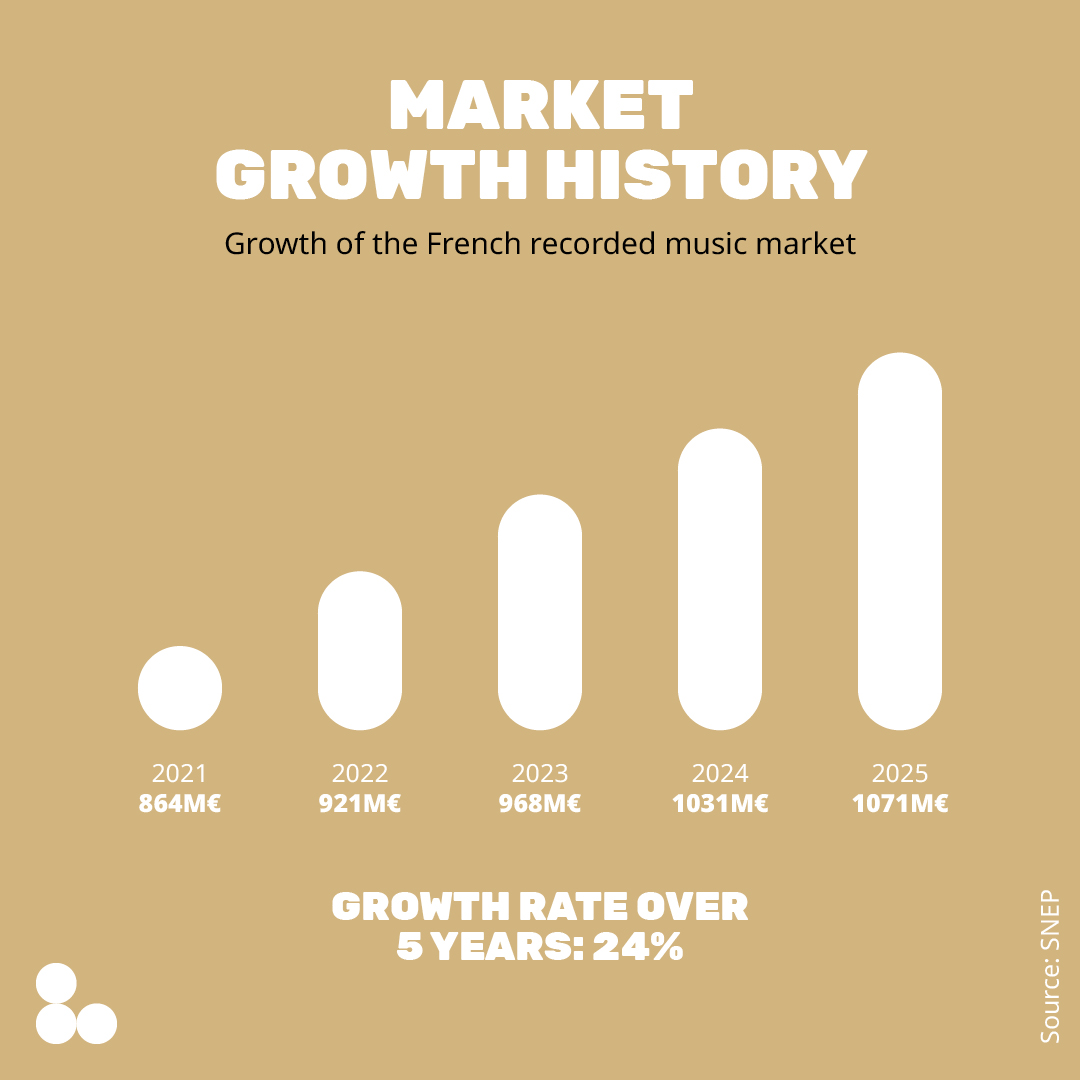
The French music industry began its recovery around 2016, after years of decline driven by the fall of physical sales and piracy. And almost ten years later, the market is in fantastic shape.
In 2025, recorded music revenue grew for the ninth consecutive year, surpassing €1.071 billion1 in revenue for the first time since 2005, a 3.9% year-on-year increase. This recovery was largely driven by the rise of music streaming and a more digitally savvy population. Music streaming now represents over 78% of recorded music revenues in France and continues to drive the market forward.
Alongside this growth in streaming, we’re also seeing a resurgence of interest in physical formats, which account for 22% of total recorded music revenue1, with vinyl making up 12% of this figure, as it enjoys a growing popularity among collectors and young audiences.
And on top of that, music consumption is at an all-time high too! According to a SNEP (Syndicat National de l’Édition Phonographique) study, French people listened to an average of nearly 19 hours of music per week in 20243.
Looking at the Top 20 best-selling albums in France in 2025, what’s immediately obvious is that the vast majority of artists represented are French-speaking and that hip-hop is very strongly represented. How do you explain this predominance?
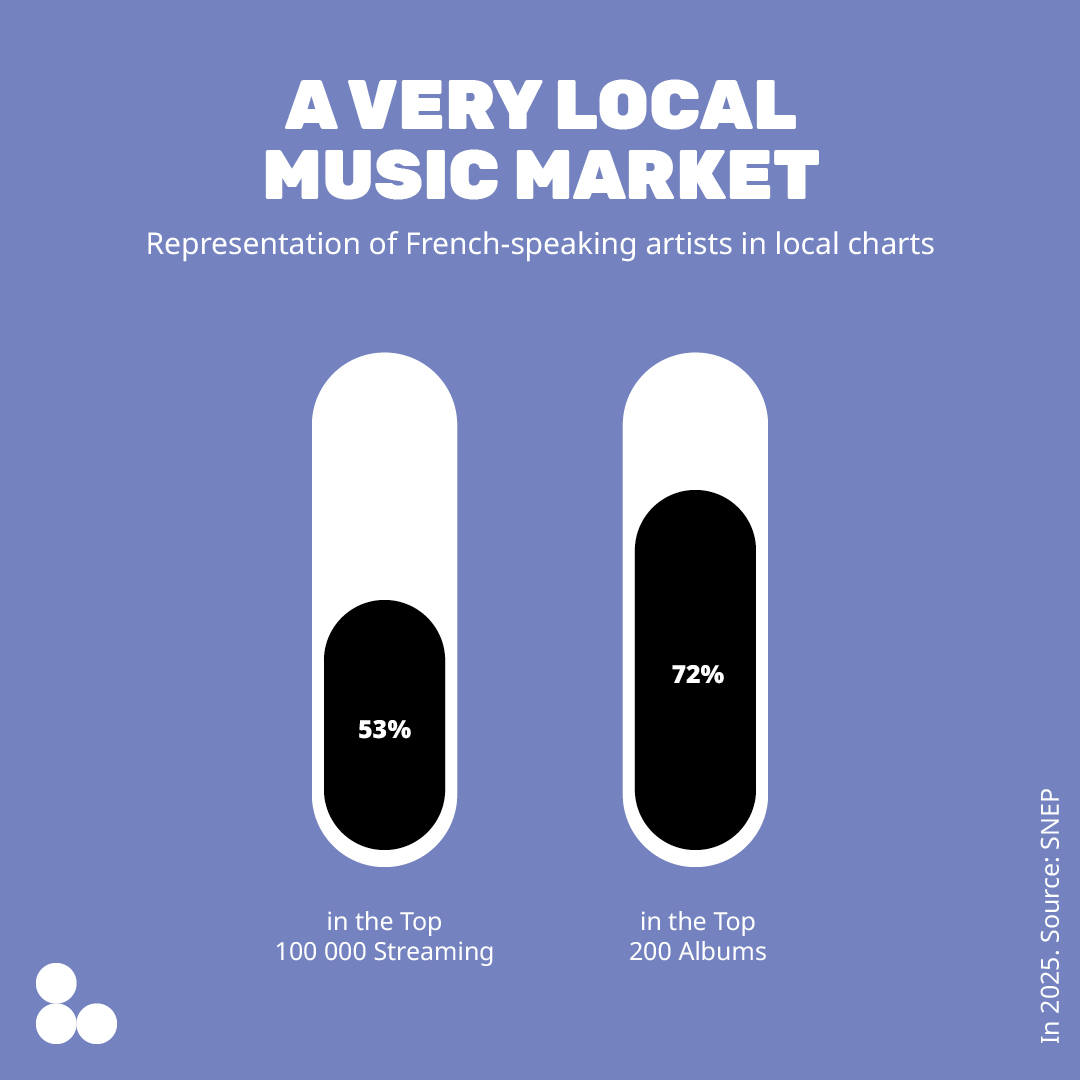
The French music scene is defined by its diversity, its creativity, and a remarkably strong local identity. In 2025, three- quarters of the Top 200 albums and 53% of the top 100 000 audio and video streaming singles were French productions1. French artists and French music are doing quite well, particularly when you look at the top of the charts. This local focus, supported by cultural policies, sets France apart in an otherwise globalized streaming environment.
French hip-hop (also called French Rap here) has been the most dominant genre in recent years, topping the charts and driving streaming volumes. Artists such as Franglish, Keblack, and Bouss represent a new generation that blends urban, Afro, and trap influences, resonating deeply with younger audiences.
French artists and French music are doing quite well, particularly when you look at the top of the charts. This local focus, supported by cultural policies, sets France apart in an otherwise globalized streaming environment.

Henri Jamet
Managing Director, France
Pop music also remains a strong pillar of the French market, with both mainstream and indie acts thriving, and labels like naïve helping to bring contemporary French pop to broader audiences.
And of course, with France having long been a global hub for electronic sounds, electronic music continues to hold a special place in French culture. New acts like Trym and TDJ are emerging alongside veterans like Acid Arab and The Blaze.
Interestingly enough, pop and hip-hop each accounted for a third of streaming listenership in 20251. And there are new surprises each year. For instance, classical music streaming revenues surpassed physical sales for the first time in history last year!
With 77% of the recorded music sales market in France, streaming has become the main source of revenue for artists and labels. For their part, platforms also need local artists to satisfy local audiences. How has this new ecosystem between platforms and artists been structured
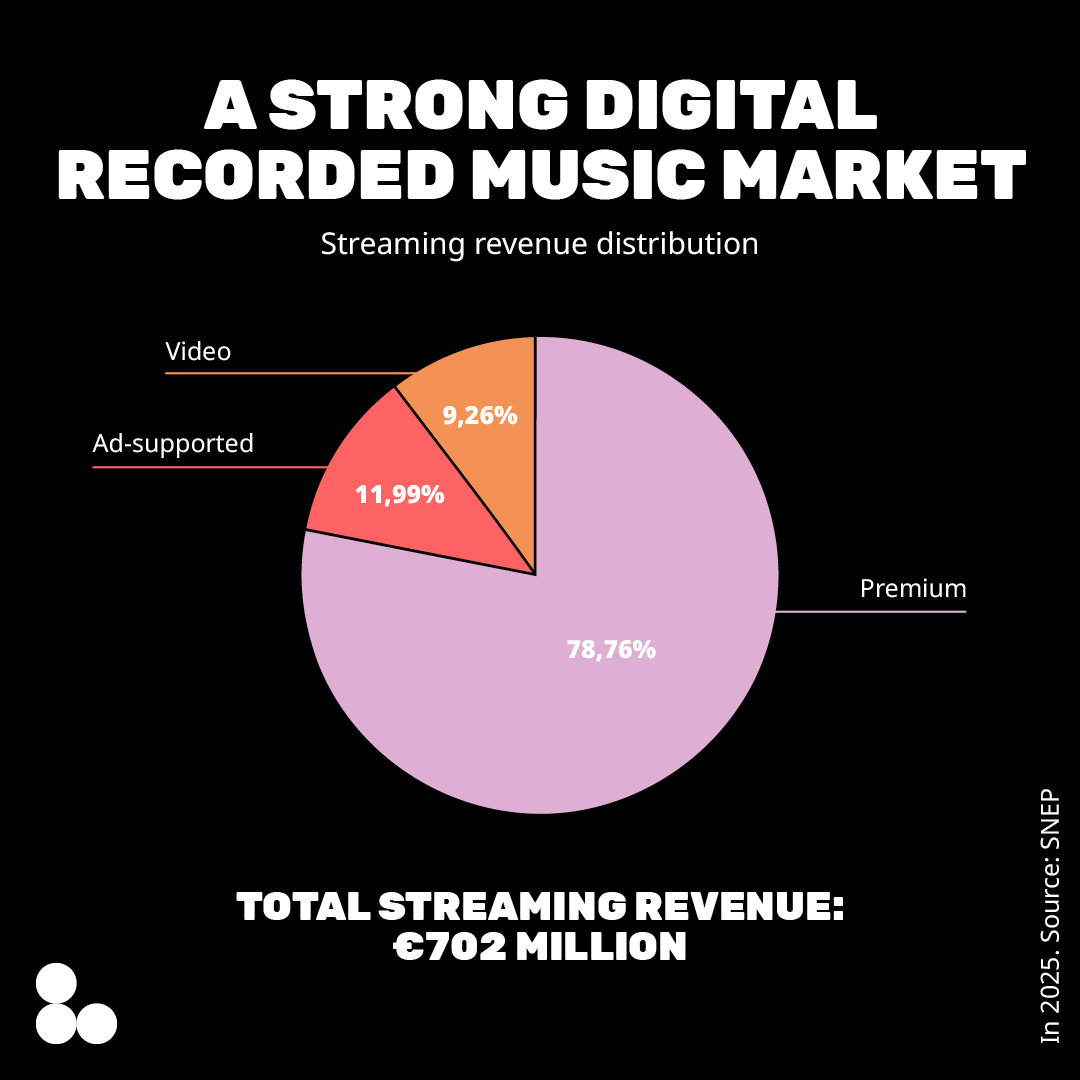
Indeed, streaming dominates music consumption in France. In 2025, there were about 18.7 million streaming users, a 5,6% increase from 20241. Still in 2025, streaming revenues grew steadily — subscription streaming up 5% and ad-supported streaming up 5,6% (according to SNEP1). However, paid subscriptions lag behind other major markets: only 27.1% of the population subscribes to a music service, placing France behind countries like the U.S. and U.K.
The relationship between streaming platforms and the French music ecosystem has become strategic and interdependent. Artists and labels depend on platforms like Spotify, Deezer, Apple Music, Amazon Music, and YouTube for visibility and monetization. Conversely, these platforms need local content — especially French-language music—to stay culturally relevant and competitive.
This has fostered a structured ecosystem where DSPs collaborate with labels to develop editorial strategies, promote emerging artists, and create playlists reflecting local tastes. Platforms also provide data insights, helping artists optimize releases and expand internationally. Programs like Spotify RADAR, Deezer NEXT, and YouTube Music Sessions support early-stage artists through marketing and social campaigns, making artists strategic partners rather than mere content providers.
Simultaneously, social media platforms like TikTok and Instagram drive music discovery and international exposure, especially among young listeners (15–24), reshaping how streaming is experienced.
With music export revenues up 19%, it seems that French artists are gaining in global weight. Beyond exceptional events such as the Olympic Games, what explains this dynamic?
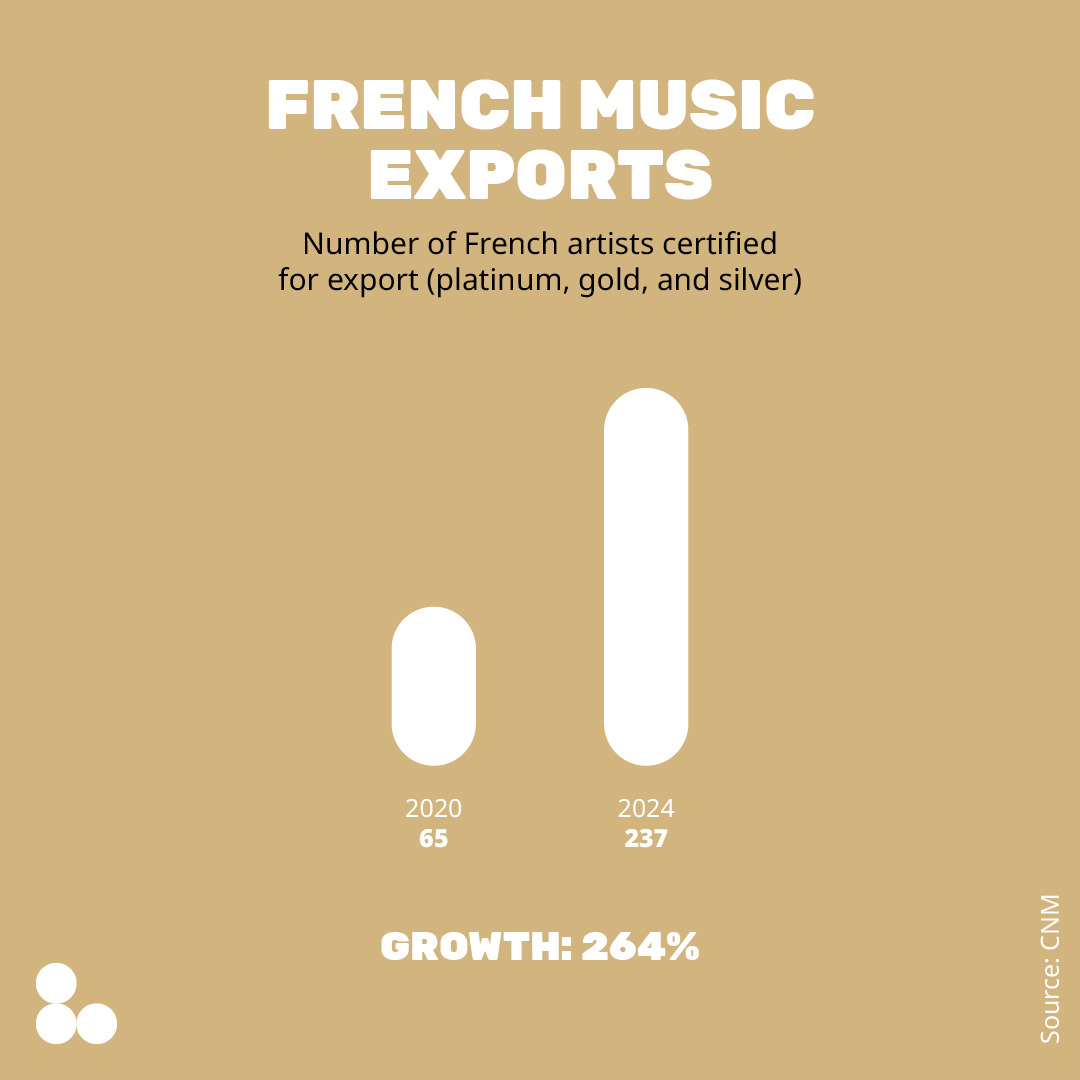
French music export revenues have surged from €136 million in 2023 to €162 million in 2024, reflecting a dynamic international expansion. According to the CNM4, the number of export certifications has also increased sharply—from 174 in 2020 to 424 in 20233. This growth goes far beyond one-off events such as the Olympic Games. In fact, it is mostly driven by changing strategies among artists, producers, and labels. Actually, the SNEP also confirmed that revenue from French film exports amounted to 148 million euros in 2025, an 11% increase compared to 2023.
Streaming and social media platforms have also revolutionized how French artists reach global audiences. Viral moments on TikTok and playlist placements on DSPs help French acts break language and cultural barriers. Many Believe artists have leveraged international streaming data and social campaigns to expand their presence beyond France. The Blaze is a great example; they’re now tapping into markets across Europe and North America.
It’s beneficial for artists, as this global exposure translates into increased streaming revenues, touring opportunities, and brand partnerships. Ultimately, the export surge reflects a new ecosystem where digital tools and strategic support empower French music to resonate worldwide.
As the French market continues to grow, how do you see it evolving over the next 5 to 10 years, not only in terms of revenues, but also in terms of consumption and musical genres?
One important thing to keep in mind is the strong commitment of French audience to French-language content. It is a defining feature of the French music market, and it sharply contrasts with many other markets where English dominates. For example, of the top 20 albums of 2025, 16 are performed in French1.
This reflects both cultural preference and protective policies, as France enforces quotas requiring radio stations to broadcast at least 40% French-language songs, helping preserve and promote domestic artists and songwriters. And I don’t see that change.
The next decade will see French music deepen its local roots while gaining a stronger global footprint—driven by innovation, strategic export, and a vibrant, digitally connected audience.
Henri Jamet
Managing Director, Believe France
What I do think is that consumption patterns will become increasingly interactive with social media platforms like TikTok and Instagram shaping not only discovery but also creation, making music a more communal experience.
Musically, the boundaries between genres will blur further. French rap and urban music, already dominant, will continue to evolve, fusing with Afrobeat, electronic, and pop influences to create hybrid sounds appealing both domestically and internationally. Meanwhile, niche genres and regional styles will gain new visibility thanks to digital platforms, empowering artists outside the mainstream.
Looking ahead, I think the French music market is poised for steady growth both in revenues and consumption diversity. Overall, the next decade will see French music deepen its local roots while gaining a stronger global footprint—driven by innovation, strategic export, and a vibrant, digitally connected audience.
About Henri Jamet
A real music lover, Henri Jamet is the Managing Director of Believe France since September 2024.
With a 20-year career in the music industry, he first worked at Universal Music and Wagram, before joining Believe France in 2013 as a Marketing Director later taking over the management of in-house labels. He and his talented team made AllPoints into a key player of the French rap scene, positioned naïve as a leading pop label, and launched the innovative imprints Animal63, All Night Long and Morning Glory.
SOURCES
1. Syndicat National des Editeurs Phonographiques – La Production musicale française en 2025
2. DataReportal – Digital 2025 France
3. SNEP – La Production musicale en 2024
4. Centre National de la Musique – Certifications Export 2024